In 2025, the IRS has made some updates to retirement savings plans in the United States. Here’s a simple breakdown to help you understand the changes: 401(k), 403(b), and 457 Plans Higher Contribution Limits Catch-Up Contributions for People Over 50 New “Super Catch-Up” for Ages 60-63 Employer Matching & Roth 401(k) Changes IRA (Individual Retirement […]
In 2025, the IRS has made some updates to retirement savings plans in the United States. Here’s a simple breakdown to help you understand the changes:
401(k), 403(b), and 457 Plans
Higher Contribution Limits
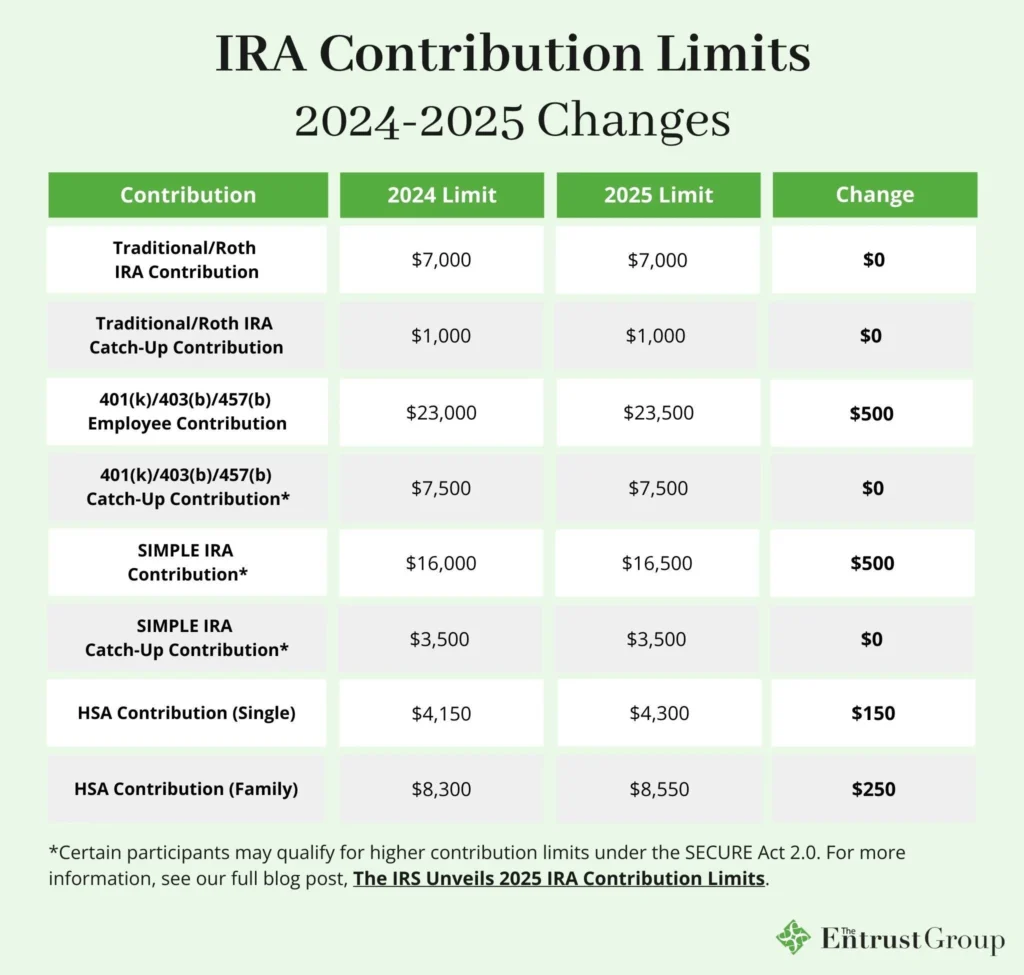
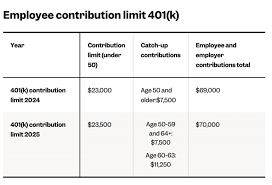
- The maximum amount you can contribute to a 401(k), 403(b), and 457 plan has increased to $23,500 in 2025.
- This is a $500 increase from the 2024 limit of $23,000.
Catch-Up Contributions for People Over 50
- If you’re 50 or older, you can contribute an extra $7,500, bringing your total contribution to $31,000 in 2025.
New “Super Catch-Up” for Ages 60-63
- If you’re between 60 and 63 years old, there’s a new catch-up rule starting in 2025.
- Instead of $7,500, you can contribute up to $11,250 extra—totaling $34,750.
Employer Matching & Roth 401(k) Changes
- Some companies will match Roth 401(k) contributions just like they do for traditional 401(k) plans.
- This means more tax-free growth options for your retirement savings.
IRA (Individual Retirement Accounts) Limits
No Change in IRA Contribution Limits
- The annual contribution limit for Traditional and Roth IRAs is still $7,000 in 2025.
- If you’re 50 or older, you can add an extra $1,000, making the total $8,000.
Higher Income Limits for IRA Deductions
- If you have a workplace retirement plan and also contribute to a Traditional IRA, you may not be able to deduct the full amount from your taxes. The income limits for these deductions have increased:
- Single filers: The deduction phases out between $79,000 and $89,000.
- Married filing jointly: The deduction phases out between $126,000 and $146,000.
Roth IRA Income Limits Increased
- The amount you can contribute to a Roth IRA depends on your income. The income phase-out ranges have increased:
- Single filers: You can contribute fully if you earn under $150,000. It phases out between $150,000 and $165,000.
- Married filing jointly: You can contribute fully if your combined income is under $236,000. It phases out between $236,000 and $246,000.
Other Key Retirement Plan Changes
Automatic 401(k) Enrollment for New Employees
- Starting in 2025, many employers will be required to automatically enroll employees in a 401(k) plan at a contribution rate of at least 3%.
Emergency Savings Accounts in 401(k)s
- Some employers may now offer emergency savings accounts inside 401(k) plans, allowing employees to withdraw small amounts without penalties.
Student Loan Matching
- If you pay off student loans, your employer can match your payments by contributing an equivalent amount to your 401(k) or 403(b) plan.
What This Means for You
These updates give you more opportunities to save for retirement. If possible, try to:
✔ Increase your contributions to take advantage of the higher limits.
✔ Check if you’re eligible for new catch-up contributions if you’re over 50.
✔ Review employer benefits to see if you qualify for Roth 401(k) matching, emergency savings, or student loan matching.
Bottom Line:
2025 is bringing better retirement savings options! Make sure to review your plan and adjust your savings strategy to maximize your future financial security.