With the November 3 midterms less than three weeks away, a handful of Senate toss-ups could determine which party controls the chamber. Here is what forecasters and polls show.
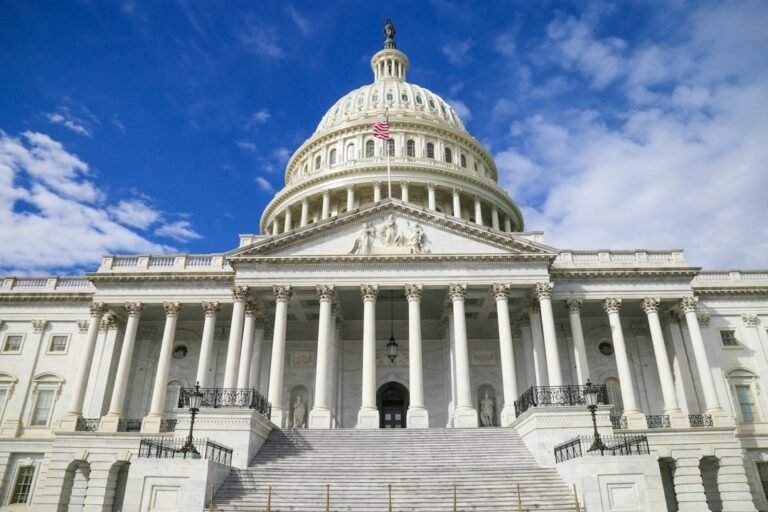
With Election Day on Tuesday, November 3, now less than three weeks away, control of the U.S. Senate appears to hinge on a short list of competitive states. All 435 House seats and 35 Senate seats are on the ballot, and the results will set the balance of power in the next Congress. Here is a fact-based look at where the Senate contest stands as of October 16, 2026, and what to keep an eye on before voters finish casting ballots.
The Big Picture: 35 Senate Seats in Play
According to a Fact Check Team report published September 18 by WJLA and sister Scripps stations, all 435 House seats and 35 Senate seats will be decided in November. The Senate is currently split 53-47 in favor of Republicans, according to Newsweek’s September 23 coverage of the race.
The Boston Globe, in a September 17 interactive, reported that Democrats would need to flip at least four of the 22 contested seats now held by Republicans to retake the chamber. Those two figures frame the contest: Republicans are defending more seats overall, while Democrats must win in states that have recently leaned Republican.
What the Cook Political Report Shows
The Cook Political Report, a nonpartisan election analysis group, rates seven Senate races as toss-ups, according to the Boston Globe: Alaska, Iowa, Maine, Michigan, New Hampshire, Ohio and Texas. The remaining 28 seats are rated solid, likely or lean for one party or the other.
On September 23, Cook updated three ratings, all in the Democrats’ direction, according to Newsweek. The changes involved:
- Georgia, a Democratic-held seat where Sen. Jon Ossoff is running against Rep. Mike Collins, a Republican.
- Kansas, a Republican-held seat where Sen. Roger Marshall faces Democrat Adam Hamilton, a pastor.
- South Carolina, a Republican-held seat that also saw a rating shift toward Democrats, per Newsweek.
Newsweek noted that Donald Trump carried Georgia by about 2 points in 2024, Kansas by 16 points and South Carolina by 18 points, which helps explain why movement in the latter two would be notable. A rating change reflects a forecaster’s judgment about competitiveness; it is not a prediction that a party will win.
Reading the polls with caution
Newsweek compiled several recent surveys. In Georgia, a YouGov poll conducted September 15-18 of 3,446 registered voters found Ossoff at 51% and Collins at 41%, while a Quantus Insights poll of 645 likely voters conducted September 14-16 showed Ossoff at 49% and Collins at 45%.
In Kansas, an Emerson College poll (September 15-16, 750 likely voters) had Hamilton at 45% and Marshall at 43%, while a co/efficient poll (September 8-10, 915 likely voters) showed Marshall ahead 49% to 44%. Those results fall within the range where differences in methodology, sample and timing can matter as much as shifts in voter sentiment, and the two Kansas polls point in different directions.
Campaign Responses
Campaigns and parties have offered their own readings. A spokesperson for Ossoff’s campaign told Newsweek that Georgia remains a battleground and that the senator faces millions of dollars in Republican spending. A spokesperson for Collins, Sam Densmore, described the race as “still competitive.” In Kansas, Hamilton campaign spokesperson Glynnis Harvey said voters are “ready for something different.”
On the Republican side, South Carolina candidate spokesperson T.W. Arrighi urged “buyer beware” about Cook’s ratings, pointing to the forecaster’s 2020 toss-up rating in that state’s Senate race, which Republican Lindsey Graham won by 10 points, per Newsweek. Rating agencies and campaigns frequently disagree, and past forecasts have both held and missed.
Prediction Markets Versus Polls
Newsweek also reported that, as of September 23, prediction markets gave Democrats roughly 63% on Kalshi and 66% on Polymarket to flip the Senate. A month earlier, Republicans led on Kalshi at 53% and the two sides were tied on Polymarket; at the start of the year Republicans were at 68% and 66%, respectively.
These markets reflect what traders are willing to bet, not official forecasts or scientific polling, and they can move quickly with news. Readers should treat them as one signal among many. Newsweek also reported that Trump’s approval rating had fallen to new lows in recent polling, a factor analysts commonly cite when assessing midterm environments, since the president’s party has historically tended to lose seats in midterm years. Supporters of the president, for their part, point to the differences between a national approval number and results in individual states.
The Other Half of Congress: The House
The Fact Check Team report highlighted a set of closely watched House contests in Arizona, California, Iowa, New Jersey, Pennsylvania, Texas, Virginia and Wisconsin. Because every House seat is up every two years, the chamber can swing on a relatively small number of districts. Voters should confirm their own congressional district, since candidates can differ even within the same state; the Fact Check Team pointed to state and local election offices, the Federal Election Commission, the Election Assistance Commission and USA.gov as official sources.
How and When to Vote
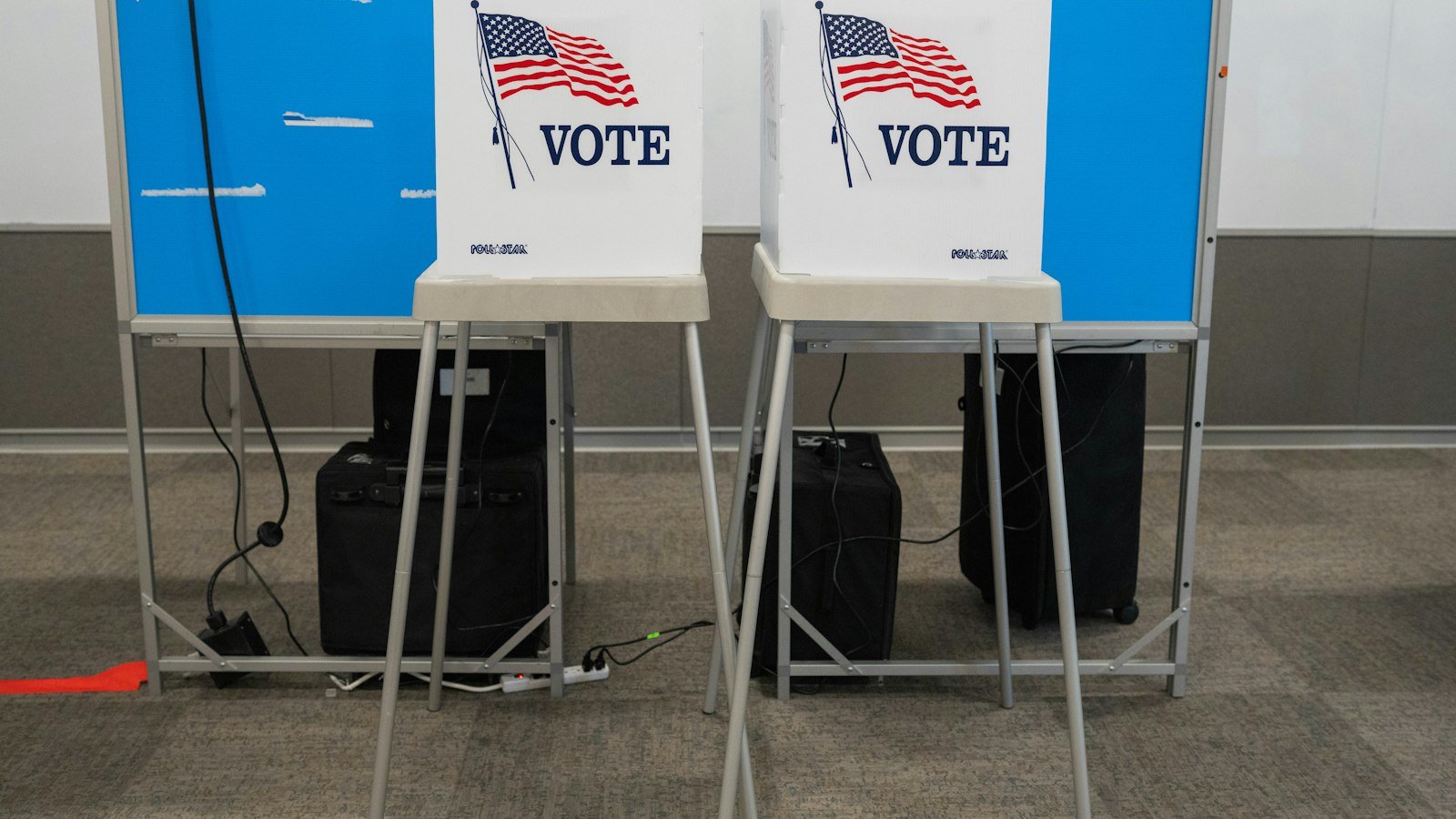
Election administration is run by states, so the rules differ by location. Newsweek reported that early voting begins this month in several states. Registration deadlines, early-voting periods, mail-ballot request and return deadlines, and ID requirements all vary. The most reliable approach is to check the website of your state or county election office directly rather than relying on a national summary, because dates and rules can change.
- Confirm your registration status and address with your state election office.
- Find your polling place and its hours, or the location of early-voting sites and ballot drop boxes.
- If voting by mail, note both the request and return deadlines and whether your state counts ballots by postmark or by receipt.
- Look up your full ballot, since many states also include governor, state legislative and local contests, as well as ballot measures.
Why These Races Matter
Senate control shapes which judicial and executive-branch nominees can be confirmed, which bills reach the floor and how oversight is conducted. House control determines committee leadership, the ability to launch investigations and the origin of spending bills. With the chambers closely divided in recent years, even a narrow shift in either body can change what Congress is able to pass. Members of both parties describe the stakes in sharply different terms, but both sides agree on one thing: turnout will matter.
What to Watch Next
- Further rating changes. Cook and other nonpartisan forecasters may move more races in the final weeks. Watch the seven toss-ups: Alaska, Iowa, Maine, Michigan, New Hampshire, Ohio and Texas.
- New polling. High-quality surveys of Georgia, Kansas and South Carolina will test whether the September shifts hold, and Kansas polls in particular have been mixed.
- Early-vote and mail-ballot data. State election offices publish turnout figures, which offer clues about participation, though they do not reveal how people voted.
- Spending. Campaign committees and outside groups typically make final advertising decisions in late October; where money is directed can signal which races each side considers winnable.
- Election Night timing. Counting rules differ by state, so some close races may take days to call.
Sources: WJLA/Scripps Fact Check Team (September 18, 2026); Newsweek (September 23, 2026); Boston Globe (September 17, 2026). Figures reflect those reports and may have changed since publication.