

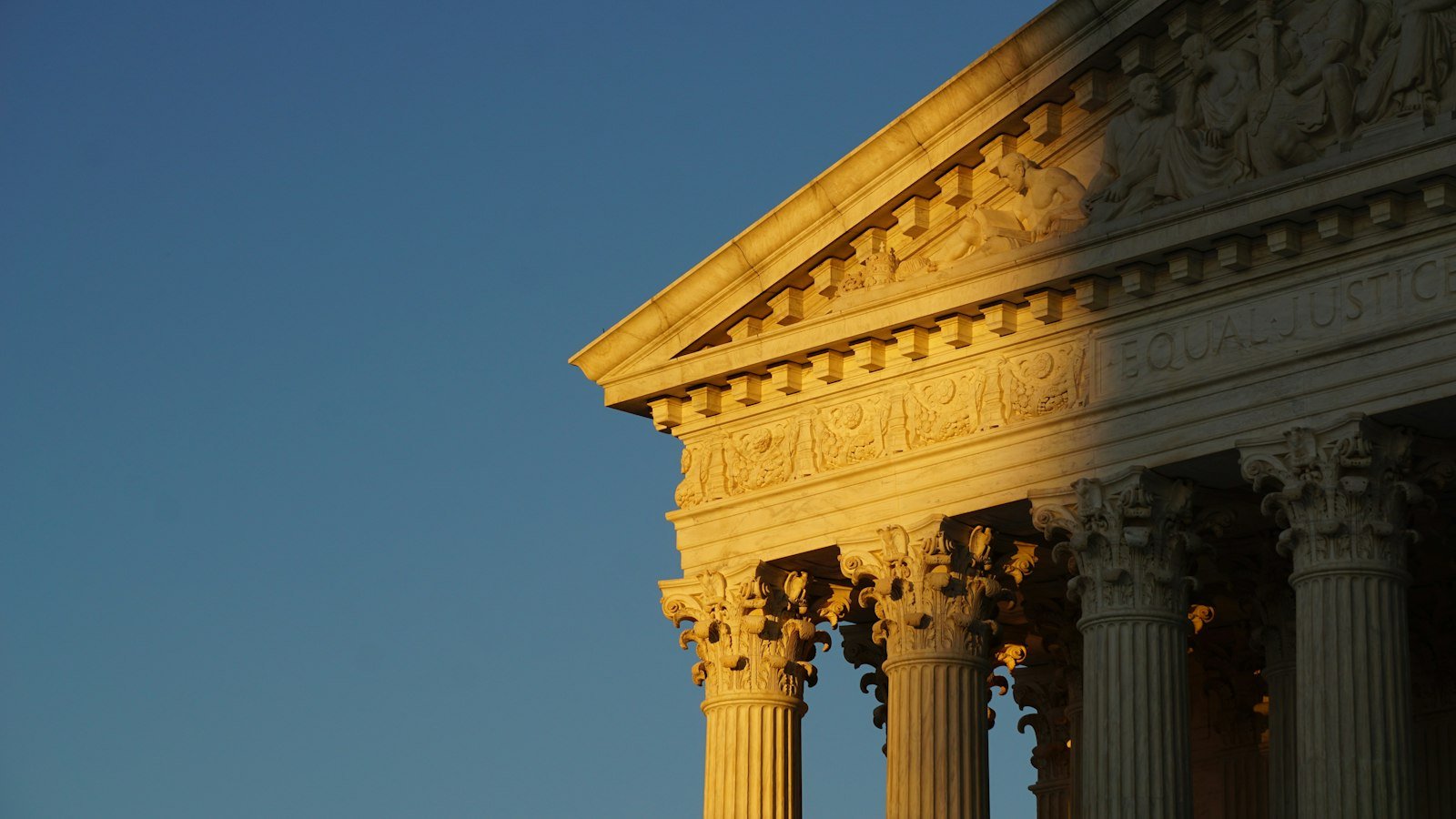
The Supreme Court began its new term Oct. 5. Here are the major cases on the calendar, from an assault weapons ban to Arizona voter proof-of-citizenship rules.
The Supreme Court opened its new term on Oct. 5, 2026, and its docket already includes disputes over climate-related lawsuits, religious schools, voter registration rules and gun restrictions. Some of the most closely watched cases will not be argued until late fall, and the justices will likely add more to the calendar in the coming months. According to a law-firm preview of the term, additional significant cases are expected to be announced in early 2027.
This guide walks through the cases scheduled so far, based on the National Constitution Center’s overview of the term’s argument calendar. It describes the questions before the court rather than predicting outcomes: oral arguments are often an unreliable guide to how justices will ultimately rule, and decisions in most major cases arrive months from now, usually by the end of June.
Cases on the Oct. 5 argument session
Suncor Energy v. Boulder County (No. 25-170)
This case asks whether federal precedent bars Boulder, Colorado, and its county from suing over harms tied to greenhouse-gas emissions that originate outside the region. Cases of this kind raise a basic question about whether such claims belong in state courts or are limited by federal law. Both sides frame it differently: those supporting the local governments emphasize their ability to seek redress for local harms, while those supporting the energy companies emphasize the national and international nature of emissions.
Johnson v. United States Congress (No. 25-735)
The justices will consider whether the Veterans’ Judicial Review Act stops district courts from hearing constitutional challenges to federal laws affecting veterans’ benefits, and how the 1974 decision in Johnson v. Robison applies.
Beaird v. United States (No. 25-5343)
This sentencing case concerns how much deference courts owe the Federal Sentencing Guidelines’ commentary, under the precedent of Stinson v. United States. The underlying sentence involved a semiautomatic weapon with a large-capacity magazine.
Salazar v. Paramount Global (No. 25-459)
This dispute asks whether Paramount can be held liable for sharing viewers’ personal information with Facebook, where the information was collected through email campaigns promoting its videos.
The Nov. 2 session
St. Mary Catholic Parish v. Roy (No. 25-581)
This religious-liberty case involves Catholic preschools that were denied state funding under a Colorado program. The question is whether they can claim religious discrimination. According to the National Constitution Center, the court will not reconsider Employment Division v. Smith, a long-standing precedent on religious exemptions. Instead, it will address how existing precedent applies when a government explicitly excludes religious institutions from public benefits.
One note on sourcing: the center’s article introduction refers to two major religious-rights cases in December but lists this case in the November session. This article follows the session listings.
Nielsen v. Watanabe (No. 25-417)
A prisoner’s claim of chronic pain following a fractured coccyx sustained in a gang fight is at the center of this case. The justices will decide whether it qualifies as an Eighth Amendment deliberate-indifference claim under Carlson v. Green (1980).
The Nov. 30 to Dec. 9 session
Individual argument dates within this window were not specified in the source material. The cases below are the ones that are expected to draw the most attention in the context of the midterm election season and beyond.
Republican National Committee v. Mi Familia Vota (No. 25-1017)
This case asks whether Arizona’s documentary proof-of-citizenship requirements and county citizenship audits conflict with the National Voter Registration Act. Election-law cases like this one draw attention from both parties. Supporters of proof-of-citizenship requirements generally argue they protect election integrity. Opponents generally argue such rules can create barriers for eligible voters and that federal law limits what states may require. The court’s eventual ruling will address the legal question of federal-state authority under the statute.
Viramontes v. Cook County (No. 25-238) and Grant v. Higgins (No. 25-566)
These consolidated-style challenges ask whether restrictions on assault rifles, including Cook County’s AR-15 ban, violate the Second and 14th Amendments. According to the center’s summary, Viramontes challenges the Seventh Circuit’s reliance on New York State Rifle & Pistol Association v. Bruen and its failure to address District of Columbia v. Heller. Gun-rights groups and gun-control groups have long taken opposing positions on such bans, and the court’s answer could affect laws across multiple states.
Jouppi v. Alaska (No. 25-246)
The question is whether courts assessing an Excessive Fines Clause challenge should judge the gravity of an offense in the abstract or based on the specific defendant’s conduct. The case involves Alaska’s attempt to seize a pilot’s aircraft after alcohol was found on a flight to a dry town.
Grand v. City of University Heights (No. 25-965)
This case asks whether the land-use finality requirement from Williamson County displaces a claim that government threats deterred a religious gathering held in a private home.
Themes across the docket
A law-firm preview from Cozen O’Connor, summarizing a Legal Intelligencer article by Stephen Miller, said the term will address constitutional and statutory questions in areas including criminal law, First Amendment rights, gun ownership, civil procedure, intellectual property, labor law and immigration. Several of those categories overlap with the cases above, though some of the listed areas, such as intellectual property, labor and immigration, are not represented in the cases covered here.
Why the calendar matters
Argument dates give a rough guide to timing but not to outcomes. Cases heard in the fall can be decided early, but major, divided cases frequently come down at the end of the term. Cases argued in the late-fall sitting, including the gun and voting disputes, may therefore not be resolved until the spring or early summer of 2027. The court can also decide cases narrowly, leaving broader questions open.
What to watch next
- Nov. 2 arguments. Listen for how the justices frame the religious-school funding question in St. Mary Catholic Parish v. Roy, given the court has said it will not revisit Smith.
- Late-fall sitting. The Nov. 30 to Dec. 9 session includes the voting and assault-weapons cases. The court’s official calendar should show individual dates.
- New grants. The justices may add cases through the winter, and the center and law firms say more significant cases are expected to be announced in early 2027.
- Emergency applications. Separate from the argued cases, the court sometimes acts on urgent requests that can touch on election-related disputes.
- Official sources. The court’s website publishes argument calendars, briefs and transcripts, which are the best primary sources for dates and questions presented.
The bottom line
The term that began Oct. 5 already contains a mix of high-profile disputes touching energy, religion, voting and firearms. None has been decided, and the court’s rulings will not come for months. Readers should consult the Supreme Court’s own calendar and docket for the latest scheduling, since dates and case lists can change.
Sources: National Constitution Center blog post on the new term’s argument calendar; Cozen O’Connor, “Preview of the US Supreme Court’s 2026 October Term.”


